The 2026 American Society of Clinical Oncology (ASCO) Annual Meeting in Chicago featured a landmark presentation from China that has captured the attention of the global oncology community. Professor Shen Baiyong (沈柏用) and his team from the Pancreatic Disease Center at Ruijin Hospital, Shanghai Jiao Tong University School of Medicine, presented breakthrough Phase I data from their personalized neoantigen mRNA vaccine, XP-004. The trial demonstrated 100% recurrence-free survival at 10 months in chemotherapy-intolerant pancreatic cancer patients — results delivered in a Clinical Science Symposium, one of ASCO’s most selective presentation formats reserved for the top 0.5% of all submitted abstracts.
Table of Contents
- 1. Breakthrough at ASCO 2026 — Clinical Science Symposium
- 2. Clinical Trial Design and Patient Population
- 3. 100% Recurrence-Free at 10 Months — Efficacy Results
- 4. Immune Response and Safety Profile
- 5. The Prime-Boost Strategy — A Global First
- 6. Key Finding: Splenectomy Does Not Hinder Immune Activation
- 7. Ruijin’s Full Pancreatic Cancer Immunotherapy Pipeline
- 8. Expert Commentary from ASCO 2026
- 9. Implications for International Patients and Medical Tourism
- Sources and References
1. Breakthrough at ASCO 2026 — Clinical Science Symposium {#asco}
ASCO’s Most Prestigious Platform for Practice-Changing Research

The 2026 American Society of Clinical Oncology (ASCO) Annual Meeting in Chicago featured a landmark presentation from China that has captured the attention of the global oncology community. Professor Shen Baiyong (沈柏用) and his team from the Pancreatic Disease Center at Ruijin Hospital, Shanghai Jiao Tong University School of Medicine, presented the first clinical data from their personalized neoantigen mRNA vaccine, XP-004, in a Clinical Science Symposium (CSS) — one of the most selective oral presentation formats at ASCO.
CSS sessions are reserved for research judged by ASCO’s scientific committee to have the highest potential to change clinical practice. Each year, only approximately 30–60 abstracts are selected for CSS out of more than 6,000 submissions — placing XP-004 in the top 0.5% of all ASCO abstracts, second in prestige only to the Plenary Session.
The strong international reception to this Phase I data signals that China’s pancreatic cancer mRNA vaccine research has entered the global first tier, and positions Ruijin Hospital as a leading destination for advanced cancer immunotherapy.
2. Clinical Trial Design and Patient Population {#trial-design}
Addressing the Unmet Need in Chemotherapy-Intolerant Patients

Pancreatic ductal adenocarcinoma (PDAC) remains one of the most lethal malignancies, with a 5-year survival rate below 12%. Even after curative-intent R0 resection, recurrence rates are devastating: approximately 50% within one year and 80% within five years. Standard adjuvant chemotherapy is the cornerstone of postoperative management, yet a significant proportion of patients — particularly the elderly and those with comorbidities — cannot tolerate the regimen.
The XP-004 Phase I investigator-initiated trial (IIT) was specifically designed for this vulnerable population. Key eligibility criteria included:
- Histologically confirmed pancreatic ductal adenocarcinoma after R0 resection (microscopically margin-negative)
- Declared unfit for or intolerant of standard adjuvant chemotherapy
- ECOG performance status 0–1
- Adequate organ function for immunotherapy
A total of 16 patients were enrolled in this single-arm, open-label Phase I study. The median age was elevated relative to typical adjuvant trial populations, reflecting the enrollment of chemotherapy-ineligible patients who often have more limited therapeutic options.
The study was registered on ClinicalTrials.gov under identifier NCT06496373 and was conducted in collaboration with Shanghai Xinpu Bio (信谱生物), the biotechnology partner that developed the mRNA vaccine platform.
3. 100% Recurrence-Free at 10 Months — Efficacy Results {#efficacy}
Imaging and Tumor MRD Dual Confirmation
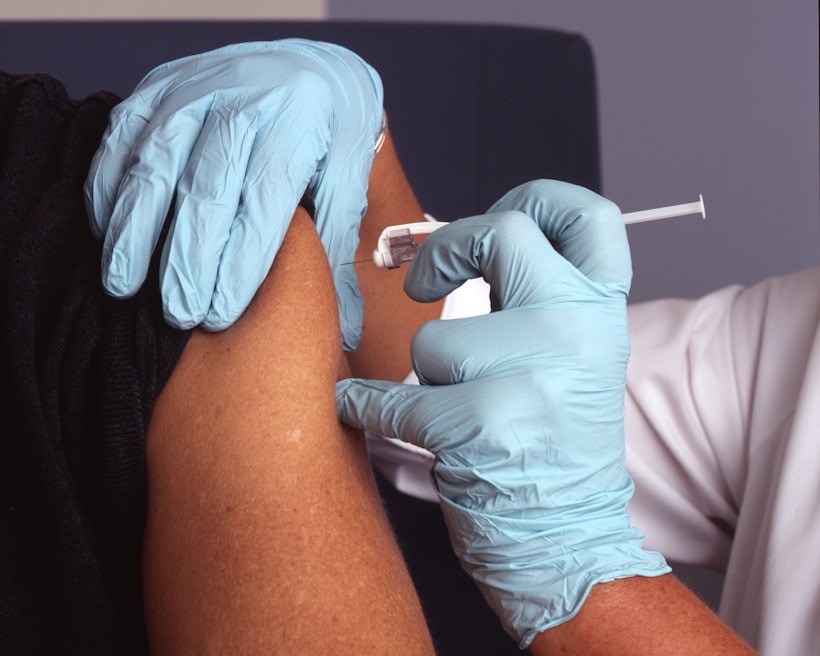
As of the data cutoff in January 2026, the efficacy results were remarkable for a Phase I trial:
| Metric | Result |
|---|---|
| Median total follow-up | 43.9 weeks (~10 months) |
| Post-vaccination follow-up | 37.6 weeks (~8.7 months) |
| Recurrence-free rate | 100% (16/16 patients) |
| Assessment method | Imaging (CT/MRI) + Circulating tumor DNA (ctDNA) MRD |
All 16 patients were confirmed recurrence-free through both conventional imaging surveillance and circulating tumor DNA (ctDNA) minimal residual disease (MRD) monitoring — a highly sensitive dual-assessment approach that significantly reduces the likelihood of undetected micro-metastases.
While the median follow-up of approximately 10 months has not yet reached the classic 24–36 month peak recurrence window for pancreatic cancer, the 100% recurrence-free survival at this time point in a chemotherapy-intolerant population — who would otherwise face near-certain early recurrence — represents an extraordinary signal of clinical benefit.
4. Immune Response and Safety Profile {#immune}
100% Immunogenicity with Manageable Toxicity

The immunogenicity assessment yielded results that benchmark at an internationally competitive level:
- Immune response rate: 100% (13/13 evaluable patients) — all patients mounted a detectable antigen-specific T-cell response
- Neoantigen conversion rate: 53 of 165 predicted neoantigens successfully activated antigen-specific T cells (32.1%), meeting international first-tier benchmarks for neoantigen vaccine platforms
- CD8+ and CD4+ T-cell activation: Multi-plex T-cell assays confirmed both cytotoxic and helper T-cell responses against vaccine-encoded epitopes
The 32.1% neoantigen conversion rate is particularly noteworthy, as it reflects the efficiency of the vaccine platform in correctly predicting, encoding, and presenting patient-specific tumor mutations to the immune system — a central challenge in personalized cancer vaccine development.
Safety data: The XP-004 regimen demonstrated a favorable safety profile appropriate for an adjuvant setting:
- Most adverse events were Grade 1–2 (mild to moderate), primarily injection site reactions, fatigue, and low-grade fever
- ≥Grade 3 adverse event rate: 12.5% — no treatment-related serious adverse events or dose-limiting toxicities were observed
- No autoimmune adverse events requiring systemic immunosuppression
- No treatment-related deaths
5. The Prime-Boost Strategy — A Global First {#prime-boost}
KRAS Universal Prime + Multi-Antigen Individualized Boost
XP-004 employs a novel two-stage, 13-cycle Prime-Boost regimen that addresses one of the fundamental challenges in personalized cancer vaccine development: the manufacturing gap between patient enrollment and vaccine delivery.
Stage 1 — KRAS Universal Prime (Cycles 1–4): For the first four doses, patients receive a universal, off-the-shelf KRAS mutation-targeting vaccine. This immediately activates the immune system against common KRAS mutations — present in over 90% of pancreatic cancers — filling the 8–9 week window required for manufacturing personalized vaccines. This design ensures no patient goes unprotected during the critical early postoperative period when recurrence risk is highest.
Stage 2 — Individualized Multi-Antigen Boost (Cycles 5–13): Once each patient’s personalized mRNA vaccine has been manufactured based on whole-exome and transcriptome sequencing of their resected tumor, treatment switches to a patient-specific multi-neoantigen vaccine. This personalized boost is designed to target each patient’s unique tumor mutational landscape, maximizing the breadth and depth of the anti-tumor immune response.
PD-1 Inhibitor Combination: Throughout the 13-cycle regimen, toripalimab (a PD-1 inhibitor developed in China) is co-administered via intramuscular injection, blocking the immune checkpoint that tumors exploit to evade T-cell attack. The combination of neoantigen vaccination with PD-1 blockade has synergistic potential: the vaccine expands tumor-specific T cells while checkpoint inhibition prevents their exhaustion.
This is the world’s first clinical trial to combine a universal KRAS vaccine with a sequential personalized neoantigen vaccine, and the first to specifically evaluate this approach in chemotherapy-intolerant pancreatic cancer patients.
6. Key Finding: Splenectomy Does Not Hinder Immune Activation {#splenectomy}
Clinically Important Mechanistic Discovery
An important sub-analysis from the XP-004 trial addresses a question that has concerned the field: whether patients who undergo distal pancreatectomy with splenectomy — a common surgical approach for tumors in the pancreatic body and tail — can still mount an effective immune response to mRNA vaccines.
The spleen is a major lymphoid organ, and some preclinical models had raised the concern that splenectomy might impair vaccine-induced immune activation, particularly for vaccines administered via intramuscular injection (which rely on lymph node drainage rather than splenic processing for antigen presentation).
The XP-004 clinical data provide a definitive answer: all splenectomized patients in the trial successfully mounted antigen-specific immune responses, demonstrating that the intramuscular mRNA vaccine platform remains fully functional even in the absence of the spleen. This finding has direct clinical relevance, as it expands the pool of patients who can benefit from this adjuvant immunotherapy approach.
7. Ruijin’s Full Pancreatic Cancer Immunotherapy Pipeline {#pipeline}
Comprehensive Coverage Across All Clinical Stages

Beyond the XP-004 adjuvant trial, Ruijin Hospital’s Pancreatic Disease Center has established an integrated immunotherapy pipeline that spans the full spectrum of pancreatic cancer care:
Adjuvant Setting:
- XP-004 (completed Phase I): KRAS prime + individualized boost + PD-1 inhibitor for chemotherapy-intolerant patients
- Chemotherapy + personalized vaccine combination trial (ongoing) — evaluating XP-004 concurrent with standard adjuvant chemotherapy
Advanced/Metastatic Setting:
- KRAS G12V vaccine trial — targeting the specific G12V mutation in advanced pancreatic cancer
- TCR-T cell therapy trial — engineered T-cell receptor therapy targeting tumor-specific antigens in advanced disease
This pipeline positions Ruijin Hospital as one of the few centers globally with an end-to-end pancreatic cancer immunotherapy program spanning from early adjuvant treatment to late-stage salvage therapy, all built on a foundation of personalized immunotherapy.
8. Expert Commentary from ASCO 2026 {#expert}
International Recognition from Leading European Oncologist
Following the CSS presentation in Chicago, the XP-004 data received an invited expert discussion from Professor Elena Garralda, Director of the Clinical Research Unit at the Vall d’Hebron Institute of Oncology (VHIO) in Barcelona and co-chair of the ESMO TAT Congress. Her commentary highlighted several aspects of the study:
- Feasibility in a difficult population: Prof. Garralda noted that XP-004 combined with PD-1 blockade demonstrates “good feasibility” in elderly, chemotherapy-intolerant patients — a group with extremely limited treatment options who are typically excluded from adjuvant trials
- Early RFS signal: She acknowledged the encouraging early recurrence-free survival data, while appropriately cautioning that longer follow-up is needed
- Scientific rationale: Prof. Garralda emphasized that “making tumors vulnerable — exploiting tumor fragility” is the core promise of mRNA neoantigen vaccines, and that XP-004’s unique KRAS prime + personalized sequential design offers a “completely new paradigm” for adjuvant immunotherapy in pancreatic cancer
The invitation of a leading European expert to provide formal discussion of a Chinese IIT at ASCO CSS underscores the scientific community’s recognition of this work’s importance.
9. Implications for International Patients and Medical Tourism {#medical-tourism}
Why Ruijin Hospital’s mRNA Vaccine Program Matters for Global Patients

The XP-004 trial at Ruijin Hospital carries several significant implications for international patients considering advanced cancer treatment in China:
1. World-Class Research Environment: Ruijin Hospital’s selection for an ASCO Clinical Science Symposium — a distinction achieved by fewer than 0.5% of submitted abstracts — places its pancreatic cancer program on par with leading academic centers in the United States and Europe. For international patients seeking cutting-edge immunotherapy, Ruijin offers access to clinical trial infrastructure that meets the highest global standards.
2. Access to Personalized mRNA Vaccine Technology: The XP-004 platform represents a sophisticated biotechnology product involving whole-exome sequencing, neoantigen prediction, and bespoke mRNA manufacturing. Patients considering medical tourism for cancer treatment should note that this level of personalized immunotherapy is available at only a handful of centers worldwide, and Ruijin’s data suggests it is being delivered at internationally competitive quality.
3. A Pipeline, Not a Single Treatment: The breadth of Ruijin’s pancreatic cancer immunotherapy program — from adjuvant vaccines to TCR-T cell therapy — means that patients at different disease stages can find relevant clinical options. This comprehensive approach reduces the risk that a patient might exhaust all options at a single center.
4. Shanghai as a Medical Tourism Hub: Shanghai is already established as Asia’s premier medical tourism destination, with JCI-accredited hospitals, international patient services, and direct flight connections from most global cities. Ruijin Hospital’s international liaison office provides English-language coordination for overseas patients.
:::note Important Note: The XP-004 trial data represent early-phase results from a small, single-arm study (16 patients). The Phase I primary endpoints were safety and immunogenicity; the remarkable 100% recurrence-free rate, while highly encouraging, requires confirmation in larger, longer-term studies. Patients interested in accessing this treatment should contact Ruijin Hospital’s clinical trial coordination office directly and discuss eligibility with their primary oncology team. All international patients must undergo standard medical evaluation before enrollment in any clinical trial. :::
Sources and References {#sources}
-
Ruijin Hospital Official News Release. “瑞金医院沈柏用团队ASCO 2026发布胰腺癌mRNA疫苗Ⅰ期数据” (Ruijin Hospital Shen Baiyong Team Presents Phase I Data of Pancreatic Cancer mRNA Vaccine at ASCO 2026). Published June 3, 2026. https://www.rjh.com.cn/2018RJPortal/doc/2026/06/03/73799.shtml
-
ClinicalTrials.gov. “Neoantigen mRNA Vaccine XP-004 in Treating Pancreatic Cancer.” Identifier NCT06496373. https://clinicaltrials.gov/study/NCT06496373
-
ASCO 2026 Annual Meeting. Clinical Science Symposium — Pancreatic Cancer. Abstract presented by Shen B, et al. Chicago, IL, June 2026. https://meetings.asco.org/ (Full abstract available via ASCO Meeting Library; access requires registration.)
-
ASCO Publications. Journal of Clinical Oncology, 2026. ASCO 2026 Proceedings. https://ascopubs.org/
-
Shen B, et al. XP-004: A Phase I Study of a Prime-Boost Neoantigen mRNA Vaccine Combined with PD-1 Inhibitor in Chemotherapy-Intolerant Resected Pancreatic Cancer. ASCO 2026 (CSS Presentation).
Disclaimer: This article is for informational purposes only and does not constitute medical advice. Clinical trial data cited are preliminary and subject to peer review. Patients should consult qualified medical professionals for treatment decisions.
© 2026 MedTourChina. All rights reserved.