1. The Patient Who Changed Everything
It was a Tuesday morning in April 2025 at Taojiang County People’s Hospital, a secondary-level facility serving a rural population in Hunan Province. A 62-year-old farmer walked in complaining of “something wrong with his vision” — a vague complaint that, in most rural clinics across the developing world, would have ended with a simple referral slip to a distant city hospital.
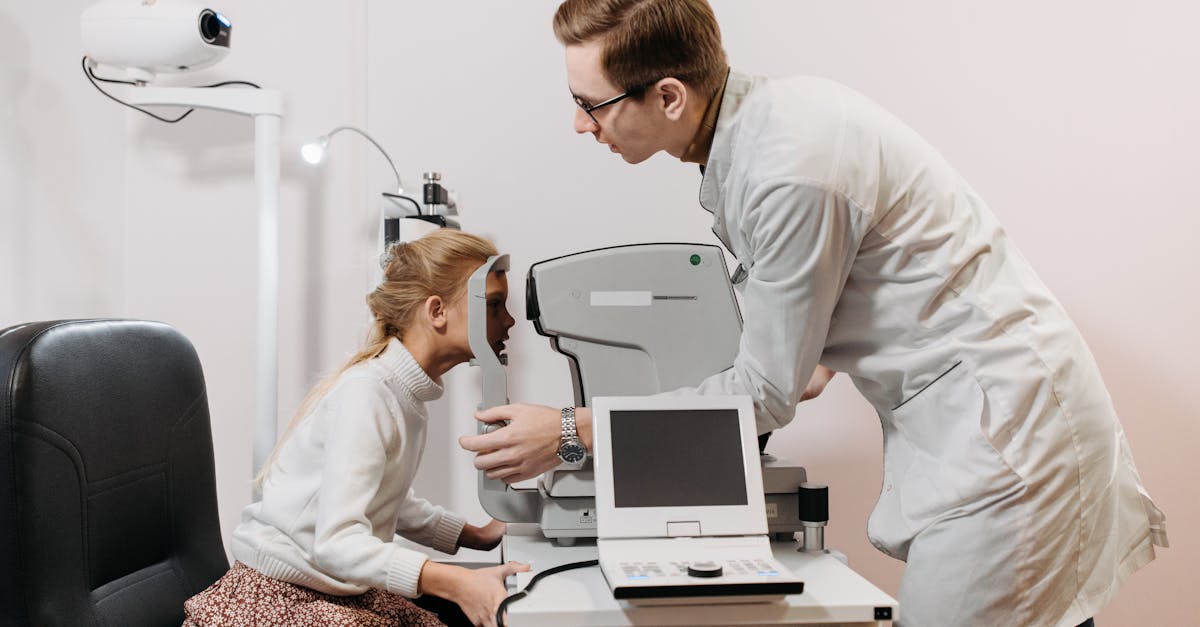
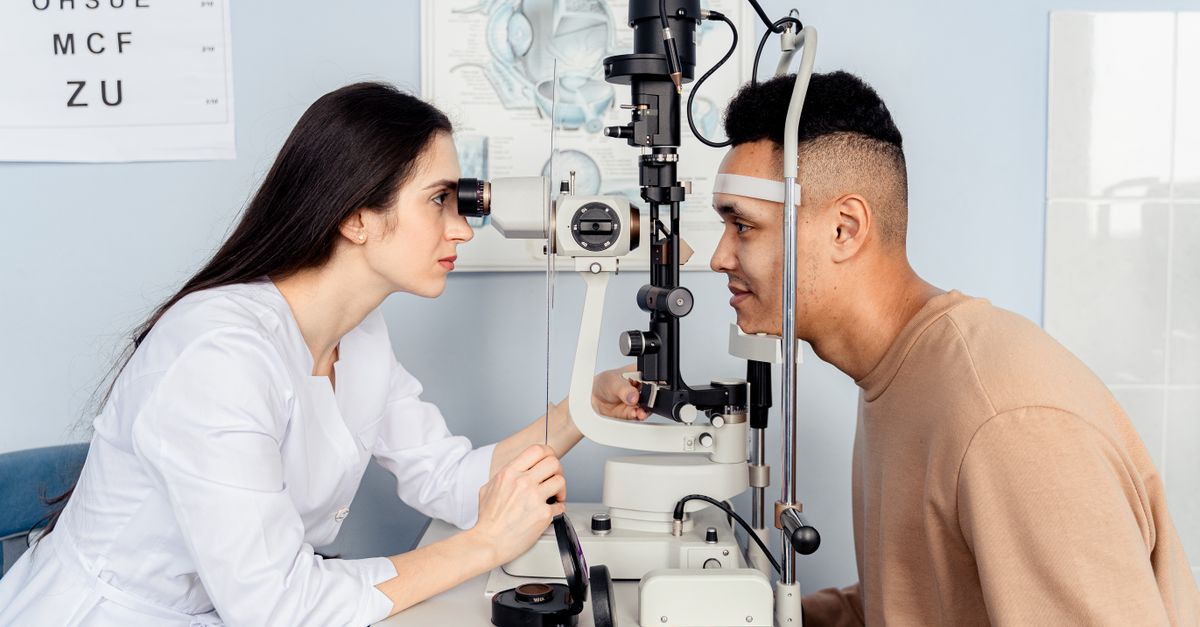
But this morning was different. The ophthalmologist on duty, Dr. Liu, pulled up the hospital’s newly installed Multi-Glau system on her computer. She entered five simple numbers: the patient’s age (62), gender (male), intraocular pressure (24 mmHg), visual acuity (0.5), and cup-to-disc ratio (0.7). No expensive imaging equipment. No OCT scan. No visual field test — equipment that costs tens of thousands of dollars and requires specialized technicians.
The system returned a result in under two seconds: “Suspected glaucoma — recommend urgent referral.”
Three weeks later, at Xiangya Hospital Central South University, a tertiary-level facility 80 kilometers away, the same patient received definitive confirmation: early-stage primary open-angle glaucoma. Treatment began immediately. His remaining vision was saved.
“Without Multi-Glau,” Dr. Liu later told researchers, “this patient might have waited months for an appointment at a city hospital. By then, the damage could have been irreversible.”

2. The Silent Thief of Sight: Why Glaucoma Matters
Glaucoma is the leading cause of irreversible blindness worldwide. In China alone, an estimated 21 million people live with the disease, and that number is projected to reach 25 million by 2050. Unlike cataracts, which can be surgically reversed, vision lost to glaucoma never comes back.
The disease damages the optic nerve, typically due to elevated pressure inside the eye. It progresses slowly and painlessly, often with no symptoms until significant vision has already been lost. By the time a patient notices peripheral vision loss, the damage is often advanced.
This is why early detection is critical. The earlier glaucoma is caught, the more vision can be preserved. But herein lies the problem: accurate glaucoma diagnosis requires sophisticated equipment — optical coherence tomography (OCT) scanners, visual field analyzers, and trained ophthalmologists who can interpret the results.
In China’s vast rural areas, such resources are scarce. A 2020 Lancet study found that 80% of China’s medical resources are concentrated in urban areas, while 60% of the population lives in rural regions. For glaucoma, this disparity is especially acute. Most rural clinics have no OCT machines. Many have no ophthalmologists at all.
3. The Care Gap: China’s Unequal Eye Health Landscape
In 2015, China established a three-tiered healthcare system to address precisely this kind of disparity. The system links primary, secondary, and tertiary hospitals in a referral network: patients are screened at local primary facilities, referred to secondary hospitals for preliminary diagnosis, and sent to tertiary hospitals for definitive treatment.
On paper, the system should work. In practice, it has struggled in specialized fields like ophthalmology. Primary hospitals often cannot reliably screen for glaucoma because they lack both equipment and expertise. Secondary hospitals may have some equipment but not the full suite needed for accurate diagnosis. Even when patients are referred, the diagnostic uncertainty at lower levels means many are sent unnecessarily, overwhelming tertiary facilities, while others who should be referred are missed.
Artificial intelligence has long been proposed as a solution. AI systems can analyze medical images with superhuman accuracy. But most existing AI models for glaucoma have a critical flaw: they require complete, high-quality data — OCT scans, fundus photographs, visual field tests — the very data that resource-limited hospitals cannot provide.
“It’s a cruel irony,” said Dr. Weitao Song, corresponding author of the Multi-Glau study and a glaucoma specialist at Xiangya Hospital. “The hospitals that most need AI assistance are the ones that cannot use existing AI models because they lack the required equipment.”
4. Multi-Glau: The Three-Tier AI Solution
On July 3, 2025, a team from Central South University’s Xiangya Hospital published a paper in npj Digital Medicine, a Nature Portfolio journal, introducing Multi-Glau — the first AI system specifically designed to work across all three tiers of China’s healthcare system.
The system comprises three distinct modules, each tailored to the resources and needs of a different hospital tier:
- Screening Module (Primary Hospitals): Uses only five simple clinical parameters — age, gender, intraocular pressure, visual acuity, and cup-to-disc ratio. No imaging equipment required. Achieved an AUC (area under the curve) of 0.9254, meaning it correctly identifies glaucoma suspects with over 92% accuracy.
- Pre-Diagnosis Module (Secondary Hospitals): Handles incomplete data scenarios. When OCT or visual field tests are unavailable, the system uses a novel “Freeze-Missing” architecture to make the best possible prediction with whatever data is available. Achieved an AUC of 0.8650 even with up to 40% missing data.
- Definitive Diagnosis Module (Tertiary Hospitals): Uses full multimodal data — fundus photographs, OCT scans, and clinical parameters — to classify glaucoma severity into four stages: early, moderate, advanced, and severe. Achieved an AUC of 0.9516, outperforming existing state-of-the-art models.
“The key innovation is not just accuracy,” said lead author Yi Zhou. “It’s adaptability. Multi-Glau meets each hospital where it is, with the resources it has.”
5. How Each Module Works
The Screening Module: Five Numbers, No Machines
For primary hospitals — community health centers, rural clinics, village medical posts — the screening module uses an XGBoost classifier trained on 3,545 patient records from Xiangya Hospital. The five input parameters can be obtained with basic equipment: a simple tonometer for eye pressure, a Snellen chart for visual acuity, and direct ophthalmoscopy for cup-to-disc ratio.
The module outputs a probability score. If the score exceeds a threshold (adjustable based on local needs), the system recommends referral. In validation tests at Taojiang County People’s Hospital, the module achieved a sensitivity of 0.9750 — meaning it caught 97.5% of actual glaucoma cases.
The Pre-Diagnosis Module: Making Sense of Missing Data
Secondary hospitals often have some diagnostic equipment but not the full suite. A hospital might have a fundus camera but no OCT scanner. Or it might have an OCT but no visual field analyzer. Traditional AI models fail in these scenarios.
Multi-Glau’s Freeze-Missing module uses a novel architecture that “freezes” the weights associated with missing modalities, preventing them from degrading the prediction. The system was tested with missing data rates from 5% to 40% and maintained reliable performance throughout.
“This is the first AI system to systematically address incomplete multimodal data in glaucoma diagnosis,” the authors note in their paper. “It bridges the gap between idealized research datasets and real-world clinical constraints.”
The Definitive Diagnosis Module: Precision at the Top
At tertiary hospitals, where full diagnostic workups are available, Multi-Glau’s M³-VF module (Multi-perspective, Multi-modal, Multi-stage Visual Field) provides precise four-stage classification. This is critical for treatment planning: early-stage patients may only need monitoring, while advanced cases require immediate surgical intervention.
The module uses a transformer-based architecture to fuse information from multiple sources: fundus photographs showing the optic nerve head, OCT scans measuring retinal nerve fiber layer thickness, and clinical parameters. It achieved 95.16% accuracy in severity staging, significantly outperforming existing models like DAFT and HoFN.
6. Clinical Performance: Numbers That Matter
The Multi-Glau system was developed using data from 27,255 glaucoma patients at Xiangya Hospital, with 3,545 cases included in the final analysis after exclusions for confounding conditions like high myopia and diabetic retinopathy. The system was then validated at two external hospitals: Yiyang Central Hospital (99 cases) and Taojiang County People’s Hospital (45 cases).
Key performance metrics:
| Module | Task | AUC | Sensitivity | Specificity |
|---|---|---|---|---|
| XGBoost Screening | Glaucoma vs. Healthy | 0.9254 | 0.8857 | 0.8812 |
| Freeze-Missing | Early vs. Serious | 0.8650 | 0.8419 | 0.7193 |
| M³-VF | Four-Stage Classification | 0.9516 | 0.7454 | 0.8733 |
Equally important, the system improved human performance. In a study with nine ophthalmologists at different experience levels, diagnostic accuracy improved significantly when doctors used Multi-Glau’s interpretability features. The improvement was most pronounced for junior doctors and for severe cases — exactly where the need is greatest.

7. Where It’s Already Working: Hospitals Across China
Multi-Glau is not a theoretical model waiting for deployment. It is already operational. The system has been deployed as both a local software tool and a web-based platform, serving hospitals across Hunan Province:
- Xiangya Hospital Central South University (Changsha): Tertiary hospital where the system was developed. Uses all three modules, with emphasis on the definitive diagnosis module for treatment planning.
- Yiyang Central Hospital: Secondary hospital. Uses the pre-diagnosis module to triage patients and determine referral urgency.
- Taojiang County People’s Hospital: Secondary hospital serving a rural population. Uses the screening module to identify glaucoma suspects from the surrounding countryside.
The system’s interpretability features — GradCAM++ visualizations showing which image regions influenced the diagnosis — have been particularly valuable for physician training. Junior doctors report that the system helps them learn to recognize glaucoma features they might otherwise miss.
“Multi-Glau doesn’t replace doctors,” said Dr. Song. “It makes doctors better. And in rural areas where specialist supervision is limited, that difference can be life-changing for patients.”
8. What This Means for Patients
For the 21 million Chinese citizens with glaucoma — and the millions more at risk — Multi-Glau represents a fundamental shift in what is possible. A disease that once required a journey to a distant city hospital can now be detected at a local clinic. A condition that silently steals vision can be caught before the damage is done.
The implications extend beyond China. Any country with a tiered healthcare system and uneven resource distribution faces similar challenges. The Multi-Glau architecture — adaptable, tier-aware, robust to missing data — offers a template that could be adapted to other diseases and other healthcare systems.
For the farmer in Taojiang County, the impact is simpler. He still has his vision. He can still work his fields. He can still watch his grandchildren grow up.
And for millions of patients like him, that is everything.
Sources and References
This article is for informational purposes only and does not constitute medical advice. Patients should consult qualified healthcare professionals for personalized medical guidance.