Revolutionary “Store First, Use Later” Approach
What if your own body could supply the bone graft you need — months after it was removed, perfectly preserved, with zero rejection risk, and ready to implant on demand? In January 2026, a 68-year-old patient at West China Hospital, Sichuan University became living proof that this is no longer theory.
Under the leadership of Professor Kang Pengde and Professor Zhou Zongke, the orthopedics team executed a landmark two-stage strategy: harvesting the patient’s femoral head during one surgery, cryopreserving it at −196°C, and implanting the same bone back 60 days later in a complex revision — eliminating the need for any additional graft material.
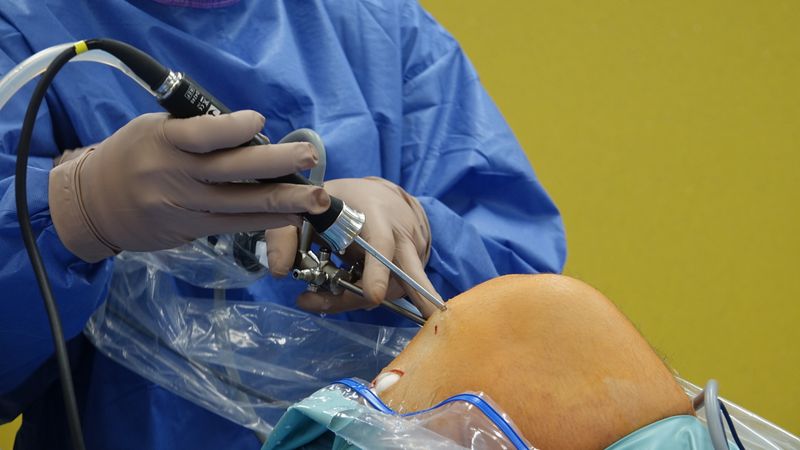
The Patient: 17 Years of Complex Orthopedic History
The case involved a 68-year-old patient with extensive orthopedic history:
- 2009: Bilateral core decompression for avascular necrosis of the femoral head
- 2012: Right total hip arthroplasty (THA) for end-stage osteoarthritis
- 2019: First right hip revision THA due to aseptic loosening
- January 2026: Second revision needed with significant acetabular bone loss, plus left hip THA required
By January 2026, both hips needed surgery — the right side requiring extensive bone reconstruction that would typically demand large-volume structural bone grafts or expensive augment devices.
The Strategy: Store First, Use Later
Professor Kang Pengde designed a brilliant staged surgical plan:
- Left First: Perform left THA first — yielding the patient’s own femoral head as a byproduct
- Cryopreserve: Instead of discarding this bone, transfer it under strict sterile protocol to the Autologous Bone Tissue Bank
- Right Later: After 60 days recovery, perform right revision THA using the patient’s own stored bone
This “先存后用” (store first, use later) approach transforms surgical “waste” into a strategic asset.
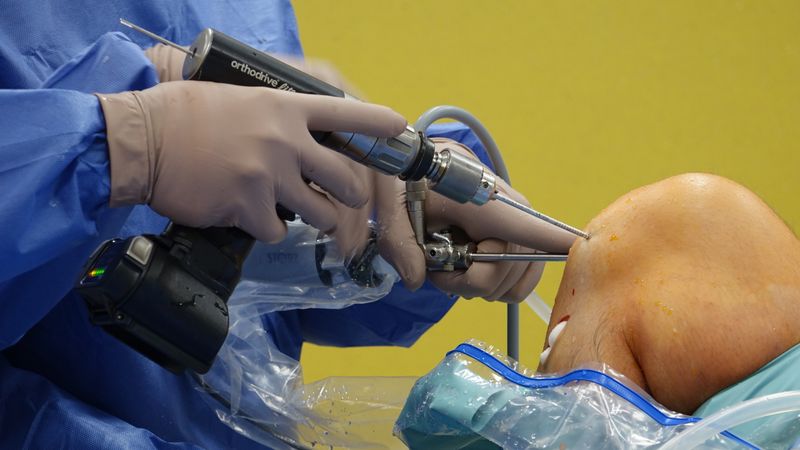
The Science: -196°C Biological Hibernation
The harvested femoral head underwent vapor-phase liquid nitrogen storage at −196°C — a temperature at which all biological activity effectively ceases. The bone entered a state of “biological hibernation”:
- Cellular metabolism stops — preventing degradation
- Trabecular microarchitecture preserved — maintaining structural integrity
- Signaling proteins remain bioactive — retaining bone morphogenetic proteins (BMPs)
- Indefinite storage possible — theoretically storable for years
Upon thawing, the bone maintained the three essential properties of an ideal graft:
- Osteoconduction: Scaffold for new bone growth
- Osteoinduction: Active recruitment of bone-forming cells
- Osteogenesis: Potential for direct bone production
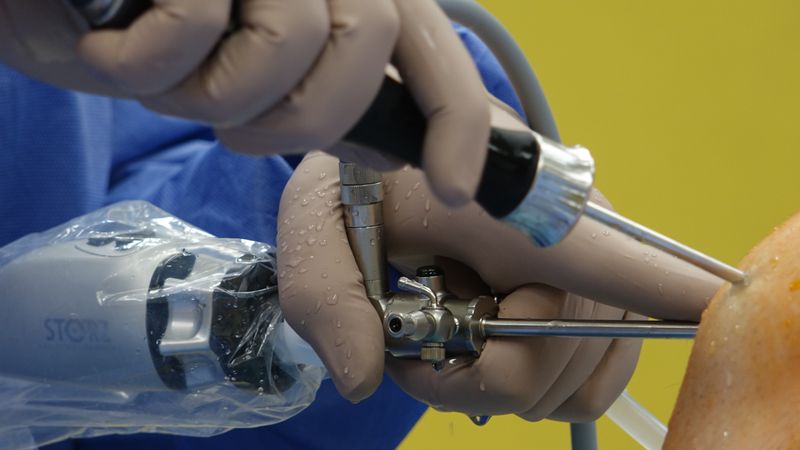
Surgical Excellence with 3D Planning
The March 2026 revision surgery employed cutting-edge technology:
- 3D-printed acetabular model created from CT data for precise surgical planning
- Patient’s own femoral head thawed and prepared for implantation
- Zero additional graft material needed — the stored bone provided sufficient volume
Because the graft was the patient’s own tissue — immunologically identical and biomechanically native — the expected osseointegration (bone healing) is significantly more favorable than with donor bone or synthetic alternatives.
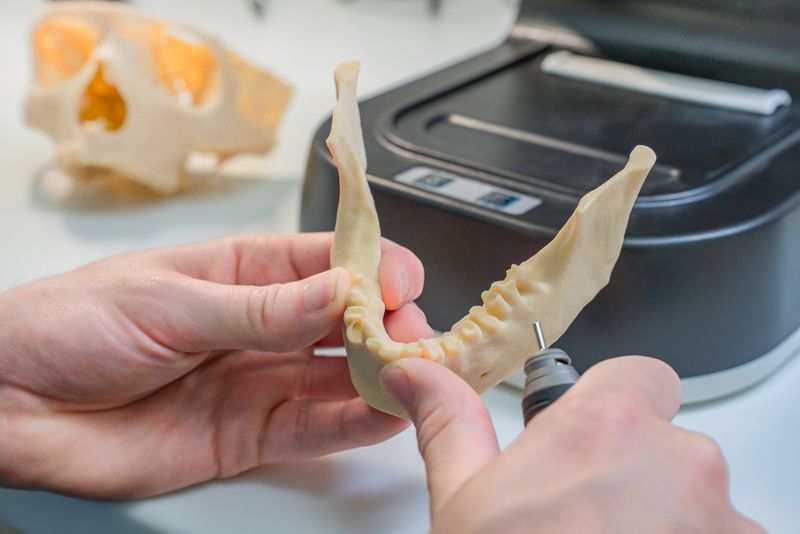
National Standard: T/FDSA 0079-2025
This breakthrough operates under T/FDSA 0079-2025, the Autologous Bone Tissue Bank Group Standard — a national standard that establishes protocols for:
- Donor eligibility and consent
- Sterile harvest and processing
- Cryopreservation parameters
- Quality control and release criteria
- Traceability and documentation
This regulatory framework transforms autologous bone banking from an ad-hoc surgical decision into a systematic, quality-controlled medical service.
Solving Three Critical Medical Challenges
1. Bone Graft Resource Scarcity
Bone is the second most transplanted tissue globally, yet supply falls far short of demand. Autologous banking creates a self-contained supply loop.
2. Donor Shortage and Allograft Limitations
Allograft (donor bone) carries risks of disease transmission and immune rejection. Autologous bone eliminates all donor-related concerns.
3. Artificial Bone Limitations
Synthetic bone substitutes lack osteoinduction — the ability to actively signal bone-forming cells. Autologous bone provides natural biological instruction.
What This Means for International Patients
For patients considering joint replacement or revision surgery in China:
- Primary THA Patients: Your femoral head can be banked for potential future revision needs
- Revision Patients: Eliminates dependency on donor bone or synthetic substitutes
- Bilateral Disease: First joint’s bone becomes resource for the second
Key Advantages:
- Storage: 5-10+ years proven possible
- Cost: Lower than structural allograft procurement
- Safety: Zero immune rejection, zero disease transmission risk
- Availability: On-demand access, no supply chain delays
Additional Innovation: Endoscopic Lumbar Fusion
In the same period, Dr. Li Tao’s team achieved the Southwest region’s first endoscopic-assisted trans-psoas lumbar interbody fusion — a minimally invasive technique reducing muscle disruption, blood loss, and recovery time.
About West China Hospital
West China Hospital of Sichuan University is a top-tier orthopedic center in China, combining tissue engineering solutions with minimally invasive techniques. The Autologous Bone Tissue Bank represents their commitment to solving real clinical problems through innovation.
Source: West China Hospital Official News — Autologous Bone Tissue Bank “Store First, Use Later” Breakthrough
Published: June 17, 2026