omuat.com | June 10, 2026
 Image: Vaccine preparation research (Credit: National Cancer Institute, Unsplash)
Imagine if the key to reversing immune aging was hiding in a specific population of stem cells all along. A groundbreaking discovery by researchers at West China Hospital suggests exactly that - and it could transform how we approach elderly healthcare.
Table of Contents
- The Aging Immune System: A Growing Global Crisis
- Landmark Discovery: The Meg3+ Stem Cell Subset
- Unraveling the H3K23ac-TRIM24-PU.1 Pathway
- The Breakthrough: Aging Can Be Reversed
- Clinical Implications: A New Era in Anti-Aging Medicine
- Source Links
The Aging Immune System: A Growing Global Crisis {#background}
 Image: Elderly health and wellness (Credit: CDC, Unsplash)
Why Immune Aging Matters
As global populations age at an unprecedented rate, immune system decline has emerged as a critical health challenge. Hematopoietic stem cells (HSCs) sit at the apex of the blood system, responsible for maintaining lifelong blood production and immune homeostasis. However, with advancing age, HSCs undergo “functional decline” and “differentiation imbalance”: they produce excessive myeloid cells and megakaryocytes while generating fewer lymphocytes (T/B cells) that are crucial for human health.
The Health Impact
This imbalance leads to weakened immunity in older adults, increased chronic inflammation, and dramatically elevated risks of pathogen susceptibility and poor vaccine responses. The question of how to delay or even reverse this process has long been a scientific puzzle that the medical community urgently needs to solve.
Landmark Discovery: The Meg3+ Stem Cell Subset {#discovery}
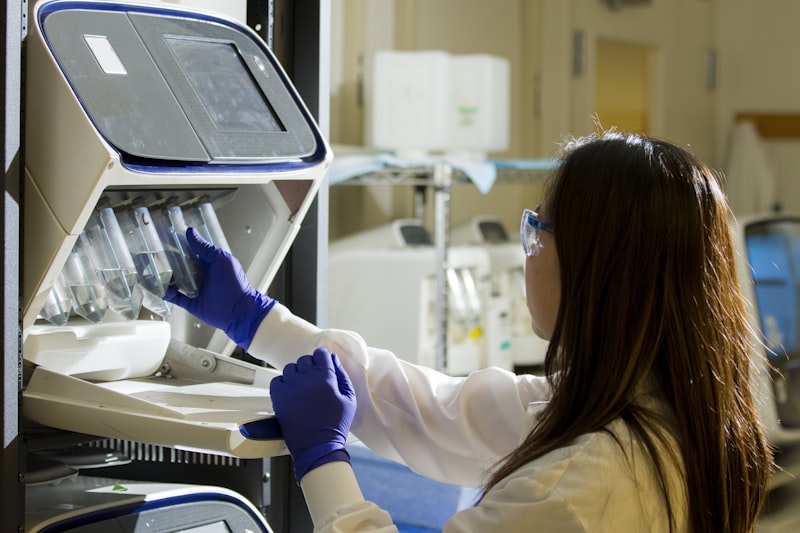 Image: DNA sequencing research (Credit: National Cancer Institute, Unsplash)
First-of-its-Kind Identification
On May 26, 2026, a research team led by Professor Zhang Huiyuan, Researcher Hu Hongbo, and Researcher Dai Lunzhi from the State Key Laboratory of Biotherapy at West China Hospital, Sichuan University, published groundbreaking findings in the prestigious international journal Nature Cell Biology. The study identified, for the first time at single-cell resolution, a population of Meg3+ hematopoietic stem cells that abnormally expand with age and drive immune aging.
Unique Cellular Signature
Using a self-developed micro-proteomics and acetylation modification analysis platform (Iseq-Kac), the research team precisely identified this specific cell subset with unique surface markers: CD150hiSca1hiCD24hiCD201+CD9+CD63+, belonging to the long-term hematopoietic stem cell subset. Importantly, these cells begin abnormal expansion during middle age and are key drivers of hematopoietic lineage imbalance and immune aging.
Unraveling the H3K23ac-TRIM24-PU.1 Pathway {#mechanism}
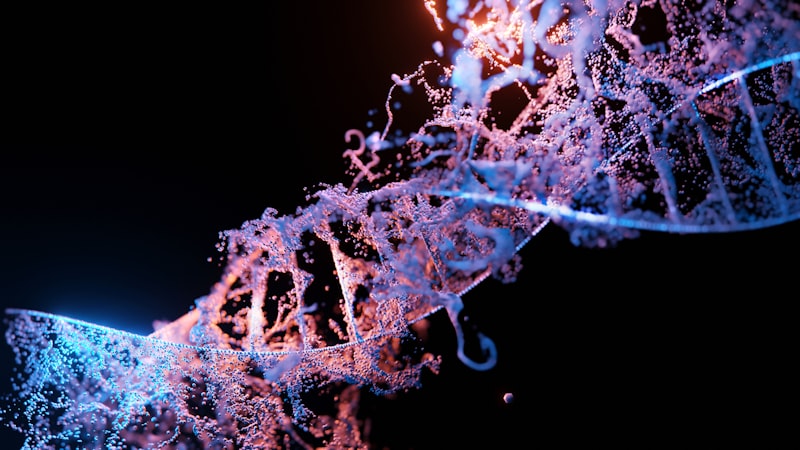 Image: DNA epigenetics structure (Credit: Sangharsh Lohakare, Unsplash)
Complete Molecular Mechanism Revealed
Mechanistic studies revealed a complete molecular pathway: Inflammatory signals → H3K23ac↑ → TRIM24 recruitment → PU.1 activity↑ → Myeloid/megakaryocyte bias → Immune aging.
The Epigenetic Connection
Specifically, aging-associated inflammatory signals, through the p65-KAT6A signaling axis, specifically induce H3K23ac histone acetylation reprogramming in this subset. Elevated H3K23ac levels further recruit the reader protein TRIM24, which synergistically enhances the activity of transcription factor PU.1, thereby driving stem cells toward megakaryocyte/myeloid lineage differentiation.
Filling the Knowledge Gap
This discovery represents the first elucidation of how inflammatory signals drive hematopoietic stem cell aging and lineage differentiation imbalance through epigenetic reprogramming, filling a theoretical gap in the field.
The Breakthrough: Aging Can Be Reversed {#reversible}
 Image: Doctor-patient consultation (Credit: National Cancer Institute, Unsplash)
Proof of Reversibility
The most exciting finding of this research is that disrupting H3K23ac-TRIM24 interaction can restore balanced lineage output in aged HSCs and reduce the senescence-associated secretory phenotype (SASP). This means the immune aging process is reversible in elderly individuals.
Drug Development Potential
The team successfully reversed this aging process through small molecule drug intervention, demonstrating that the H3K23ac-TRIM24 interaction is a potential drug target for reversing aging-related immune decline. This discovery provides theoretical and practical foundations for developing targeted drugs against immune aging, with potential future applications in improving vaccine immune responses and reducing chronic inflammation in the elderly.
Clinical Implications: A New Era in Anti-Aging Medicine {#clinical}
 Image: Medical team collaboration (Credit: Luis Melendez, Unsplash)
Transformative Potential
This research demonstrates immense potential for clinical translation. Key implications include:
Mechanistic Breakthrough
First revelation of the H3K23ac-TRIM24-PU.1 axis as the key molecular mechanism linking inflammation to hematopoietic stem cell aging.
Therapeutic Target
The H3K23ac-TRIM24 interaction emerges as a potential drug target for reversing aging-related immune decline.
Disease Connections
Explains the cellular basis for decreased immune function, increased chronic inflammation, poor vaccine responses, and elevated risks of cardiovascular diseases, neurodegenerative diseases, and cancer in older adults.
Intervention Strategy
Provides theoretical basis for developing therapies to intervene in HSC aging and restore immune balance.
International Recognition
This research was jointly completed by West China Hospital, the School of Life Sciences at Sichuan University, and the First Affiliated Hospital of Chongqing Medical University, with funding from the National Natural Science Foundation of China and the National Key R&D Program. This represents another significant breakthrough for Chinese medical research in a top international journal, marking China’s achievement of international frontier status in stem cell aging research.
Source Links {#sources}
- West China Hospital Academic News: Nature Cell Biology Publication on Hematopoietic Stem Cell Aging
- Nature Cell Biology Original Paper: Epigenetic programming by H3K23ac defines lineage fate of Meg3+ haematopoietic stem cells and drives immune ageing
- PubMed: Epigenetic programming by H3K23ac defines lineage fate of Meg3+ haematopoietic stem cells